Why TypeScript + Python is the ultimate combo in 2026
The best engineers in 2026 aren't choosing between frontend and AI. They're fluent in both. TypeScript runs the interface, Python runs the intelligence.
In 2022 you could pick a lane. In 2026, the highest-leverage products are AI-native UIs: real-time collaborative apps that call local LLMs, analytics dashboards that stream from Python data pipelines, agents that live in the browser but reason on the server.
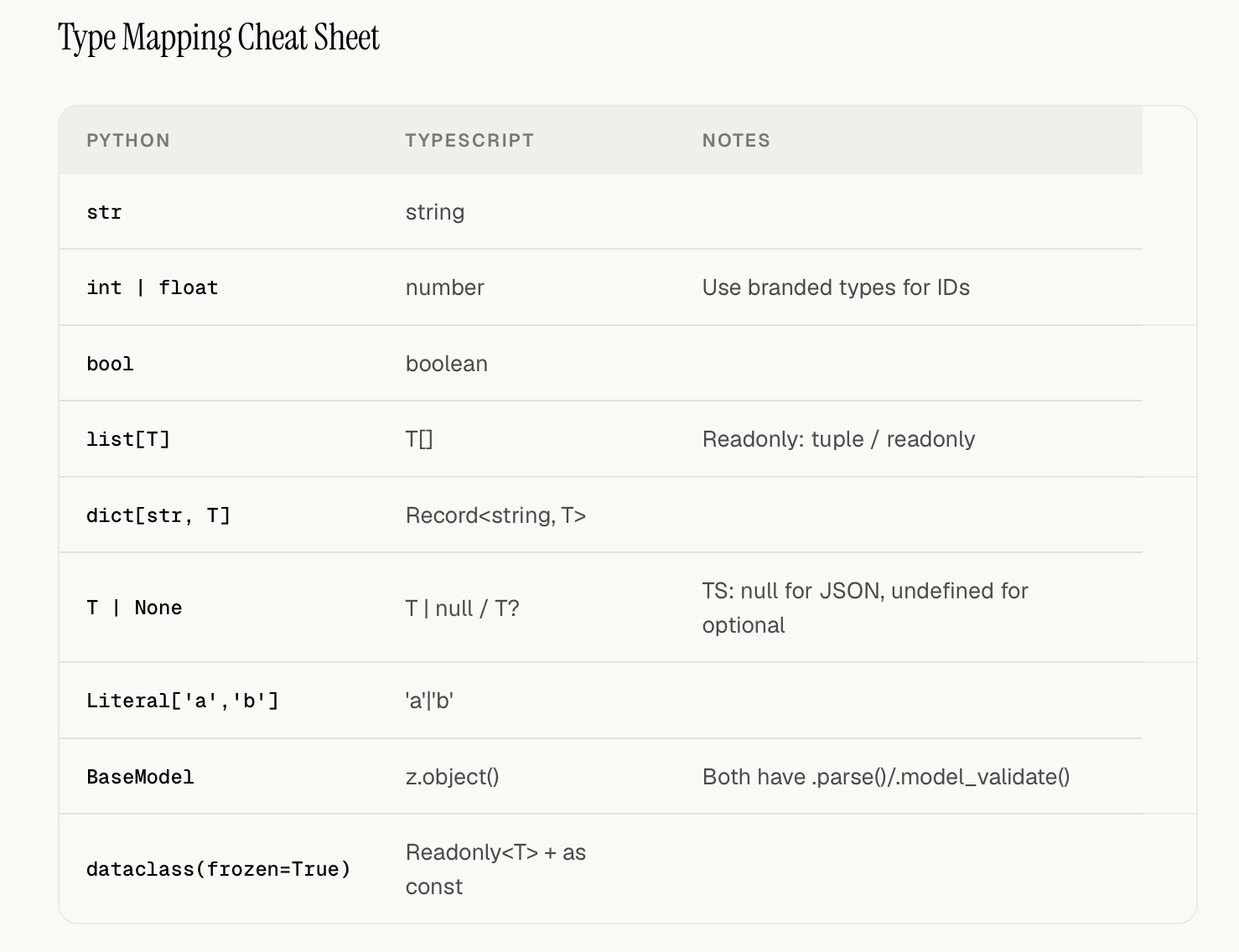
Learn the polyglot mental model: type-safe contracts from UI to model, shared validation with Zod & Pydantic, and deployment patterns that don't make you hate monorepos.
The Thesis
TypeScript owns human-computer interaction: React, Next.js, tRPC, WebSockets, edge functions.
Python owns machine-computer interaction: data, training, inference, notebooks that become services.
You own the boundary. That's where 10x value is created.
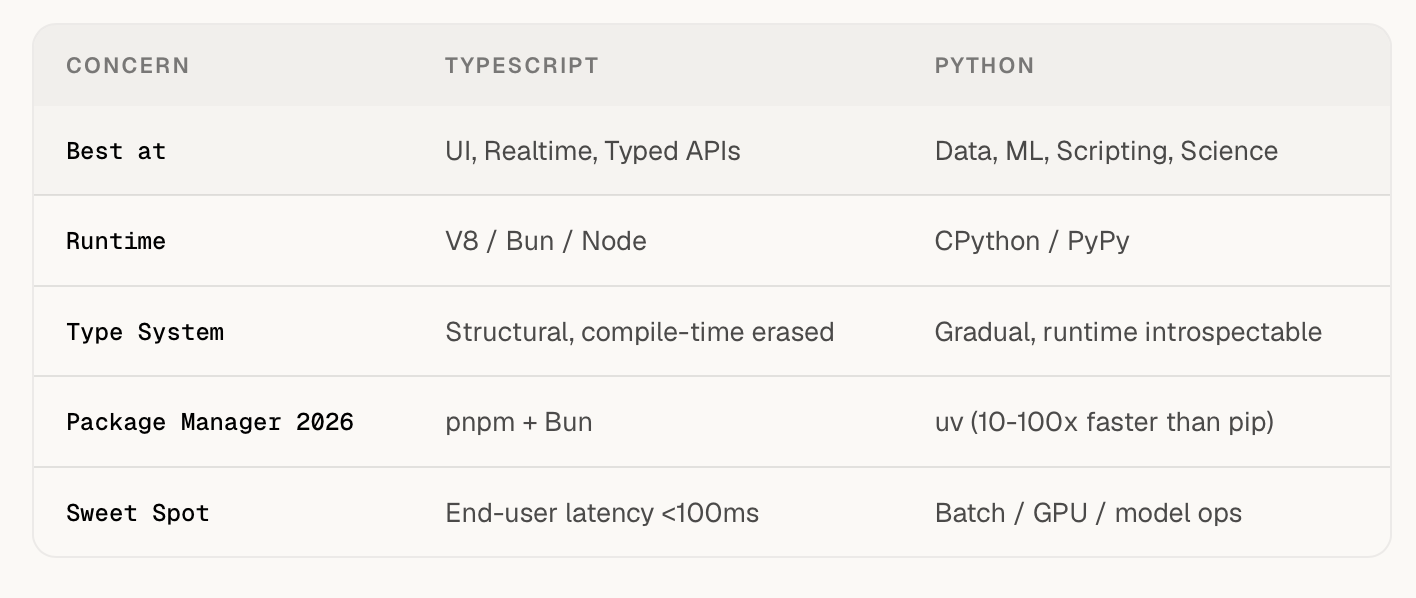
Typescript vs Python comparison
“The Polyglot Rule: If it touches a pixel or a click, write it in TS. If it touches a tensor or a table, write it in Python. Everything else is negotiable.”
Let’s ship. A real app: “Second Brain” - upload docs, chat with them, Typescript frontend, Python RAG backend.
Stack Decisions
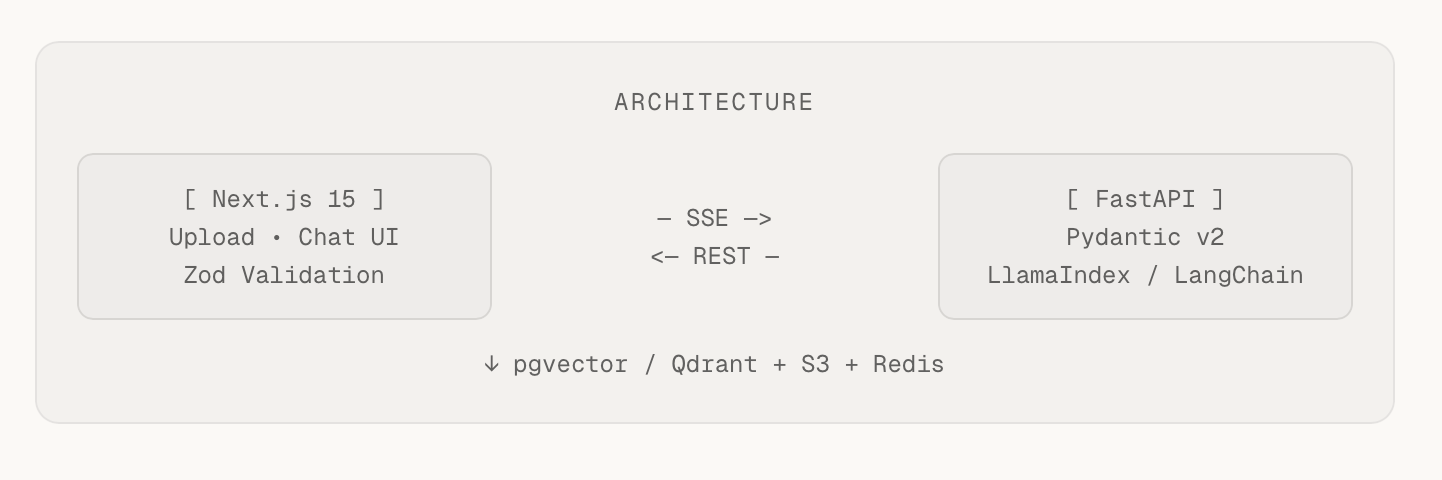
Frontend: Next.js 15 App Router, shadcn, Tailwind, Zod, TanStack Query, Vercel AI SDK
Backend: FastAPI, Pydantic v2, SQLModel, Qdrant for vectors, S3 presigned uploads
LLM: OpenAI or local Ollama — same interface via LiteLLM
Shared: OpenAPI → generated hooks, same error shape
Cheat Sheets & Best Practices
The pages you'll screenshot
Polyglot Commandments
01- One source of truth for schemas. Generate the other.
02 - Never use `any`. Use `unknown` + Zod/Pydantic parse.
03 - Async everywhere or nowhere. Don't mix sync requests in async Python.
04 - Stream LLM responses. Don't wait for full completion.
05 - Proxy Python behind /api/py to kill CORS.
06 - Use `uv` not pip. Use `pnpm` not npm.
07 - Error shape: { code, message, details }. Same in both.
08 - Test boundaries, not internals. Parse at edges.