
You stay in control
The AI can recommend.
You decide.
Approve the findings that are right and reject the ones that are not. Boots waits for human review before a finding enters client memory or influences a proposal.
The client’s primary concern is reducing lead response time.
Source: Discovery meeting · 3 supporting referencesThe client may prefer a fully automated sales process with no human involvement.
Source: Website inference · no direct confirmationReview every finding
Approve, reject, or validate intelligence before allowing the system to use it.
Human decisionApproved intelligence enters memory
Rejected findings are excluded. Approved findings become governed client context.
Controlled memoryGoverned memory writes the proposal
Generation draws from reviewed intelligence—not raw, unverified assumptions.
Approved outputTransparent by design
Every finding comes with receipts.
Boots does not ask you to trust a black box. Every finding includes its source, supporting evidence, and confidence score—so strong signals move forward and weak ones get reviewed or discarded.
Detected business priority
The client’s primary concern is reducing lead response time.
This finding is supported by repeated references across the discovery conversation and the client’s submitted intake information.
“We are getting the leads, but we cannot always respond quickly enough while the team is in the field.”
A source on every finding
Website content, meeting notes, approved documents, or research—you can always see where it originated.
A visible confidence score
Source trust, consistency, and conflicting evidence contribute to a clear strength indicator.
See why the system believes it
Supporting evidence stays visible and connected to the finding instead of disappearing inside a model.
The Intelligence Layer That Runs Before The Proposal
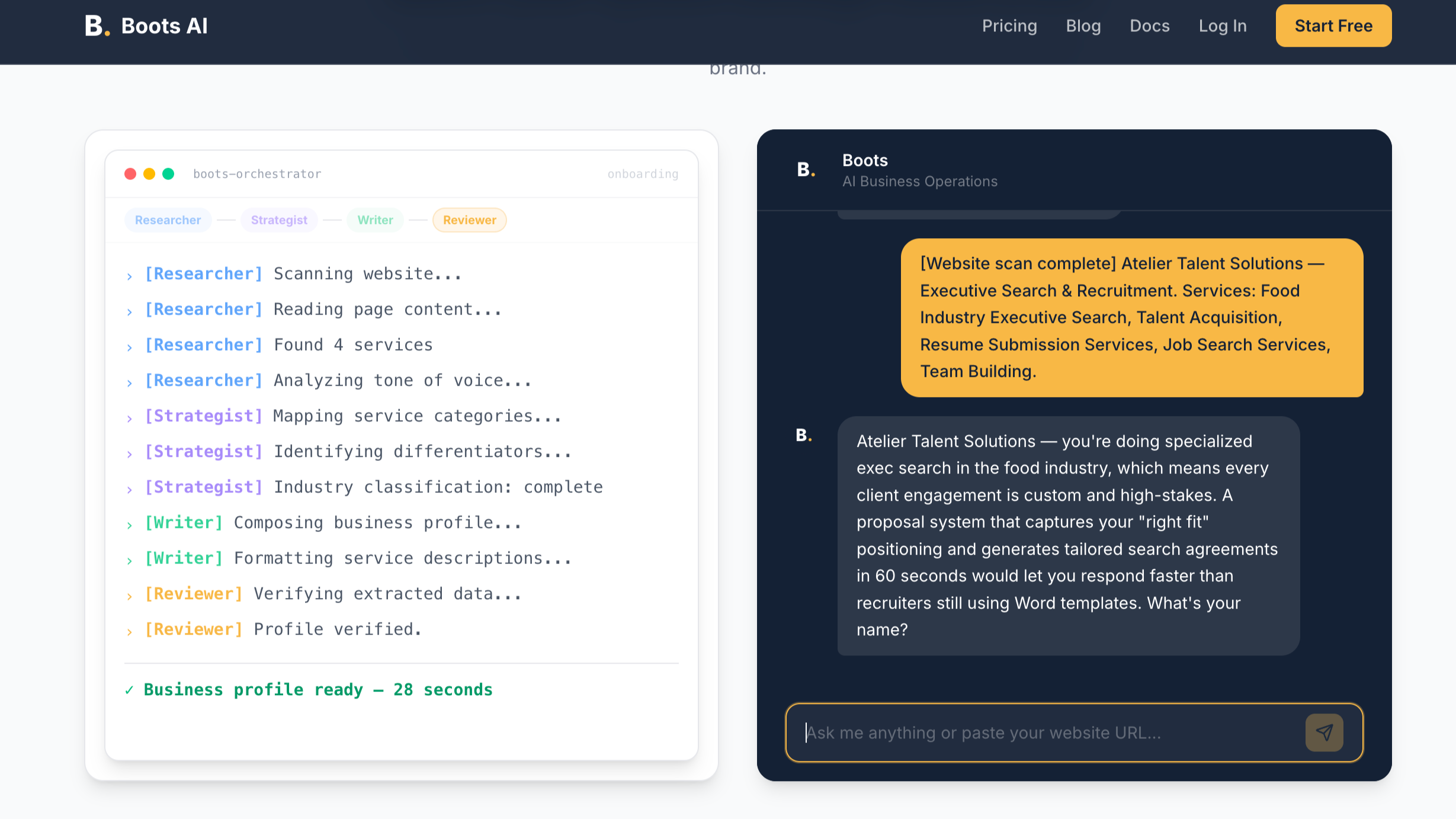
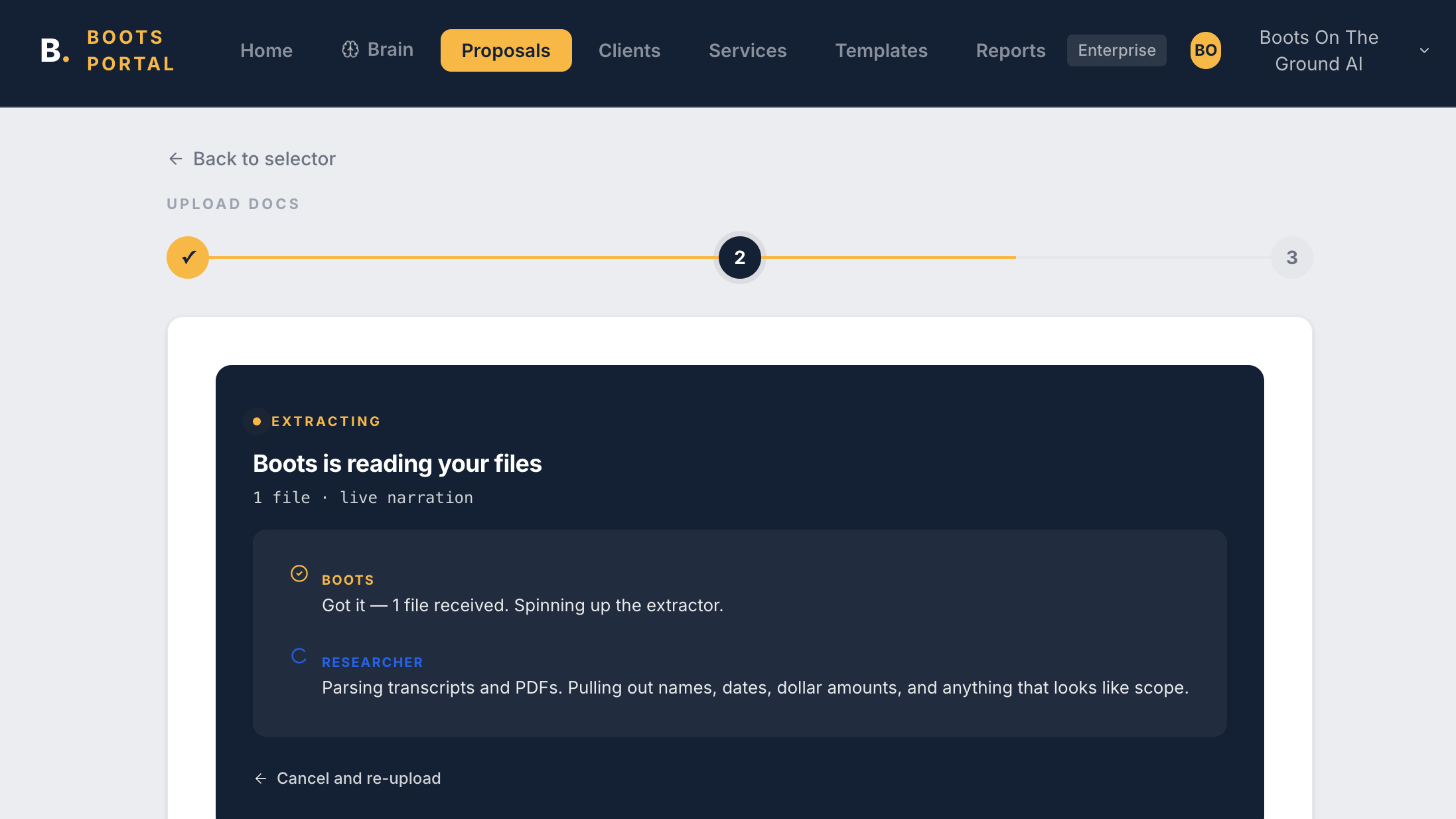
Most AI tools start writing the moment you hit go. Boots starts by researching your buyer. Paste a prospect's website and Boots reads it for you — pulling their company profile, services, audience, differentiator, voice, pain signals, and buying context. Then it does the thing other tools skip: it shows you what it found, where it found it, and how sure it is. Nothing it learns touches your proposal until you say so.