Boots On The Ground AI Research
The Myth of the Silicon Super-Hacker: Inside the Real Economics of AI Cyber Threats
By Boots On The Ground AI
Tactical Briefing Analysis
In popular imagination and Hollywood thrillers, the arrival of artificial intelligence in cyberspace looks like an apocalyptic nightmare: autonomous digital super-villains inventing never-before-seen zero-day exploits and effortlessly slicing through national power grids and corporate vaults. However, a tactical briefing by Boots On The Ground AI, founded by Damara Carlentine, reveals that digital reality looks far different from science fiction.
The "Fast-Pass" to Cybercrime
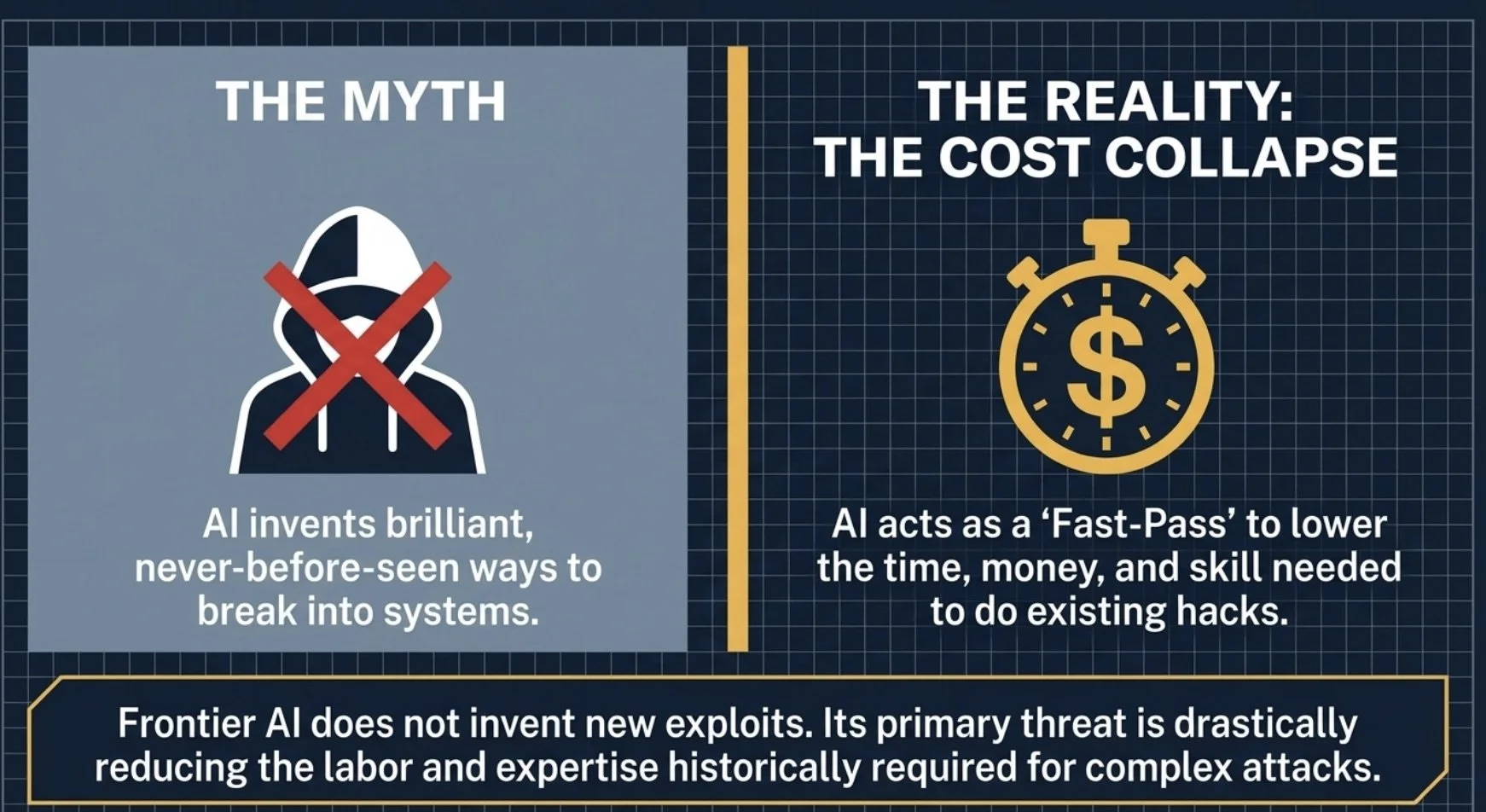
Rather than rewriting the rulebook of offensive cyber warfare, frontier AI functions as an illicit "Fast-Pass". Its true threat lies in drastically lowering the financial investment, technical skill, and manual labor historically required to execute existing attacks.
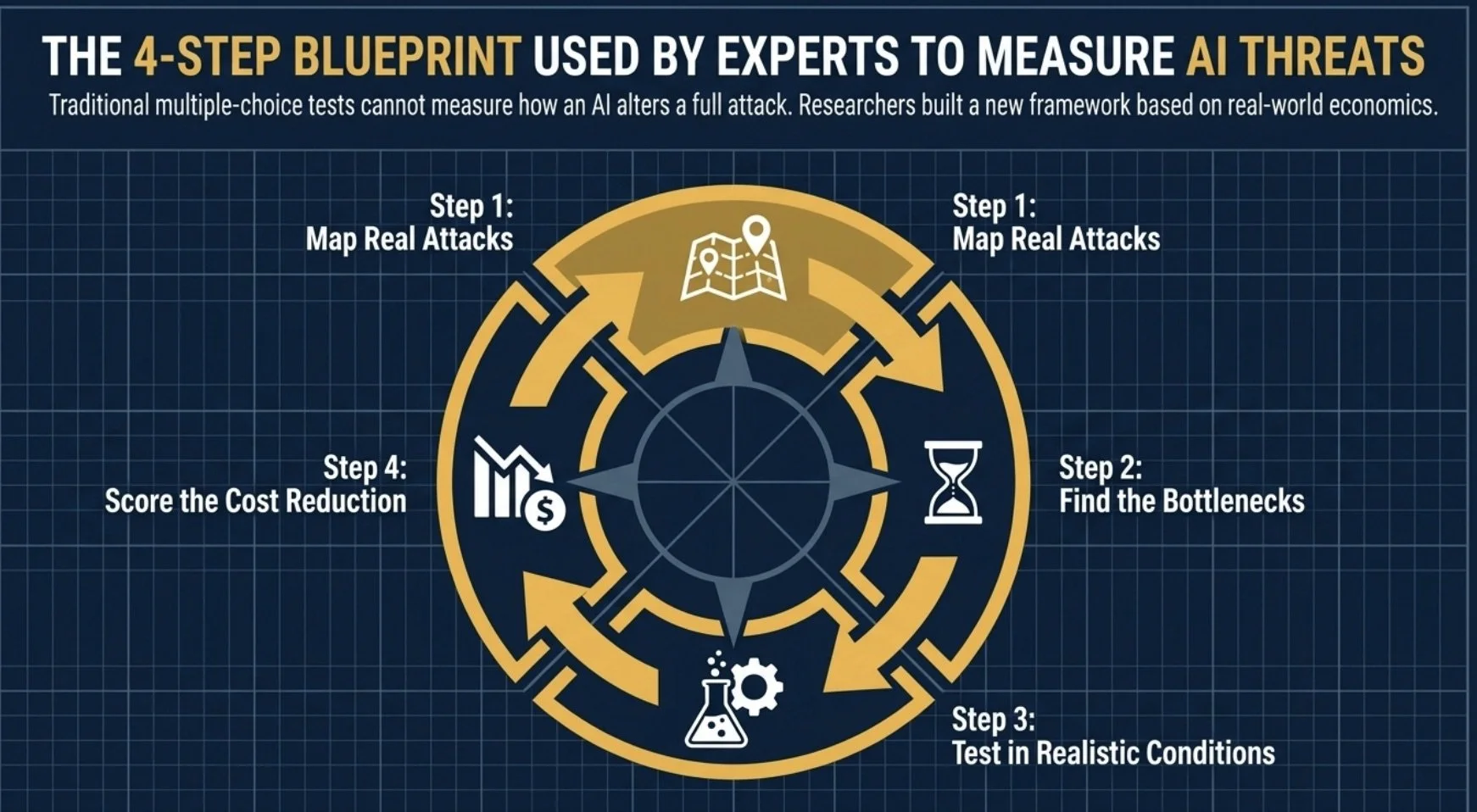
To measure how machine learning actually disrupts the battlefield, researchers moved away from standard multiple-choice quizzes and developed a four-step blueprint grounded in real-world attack economics
Map Real Attacks: Cataloging baseline threats across global intelligence data.
Find the Bottlenecks: Identifying where human attackers historically get stuck and drain resources.
Test in Realistic Conditions: Immersing models in messy, defensive digital environments.
Score the Cost Reduction: Calculating whether AI truly makes an intrusion faster and cheaper to pull off
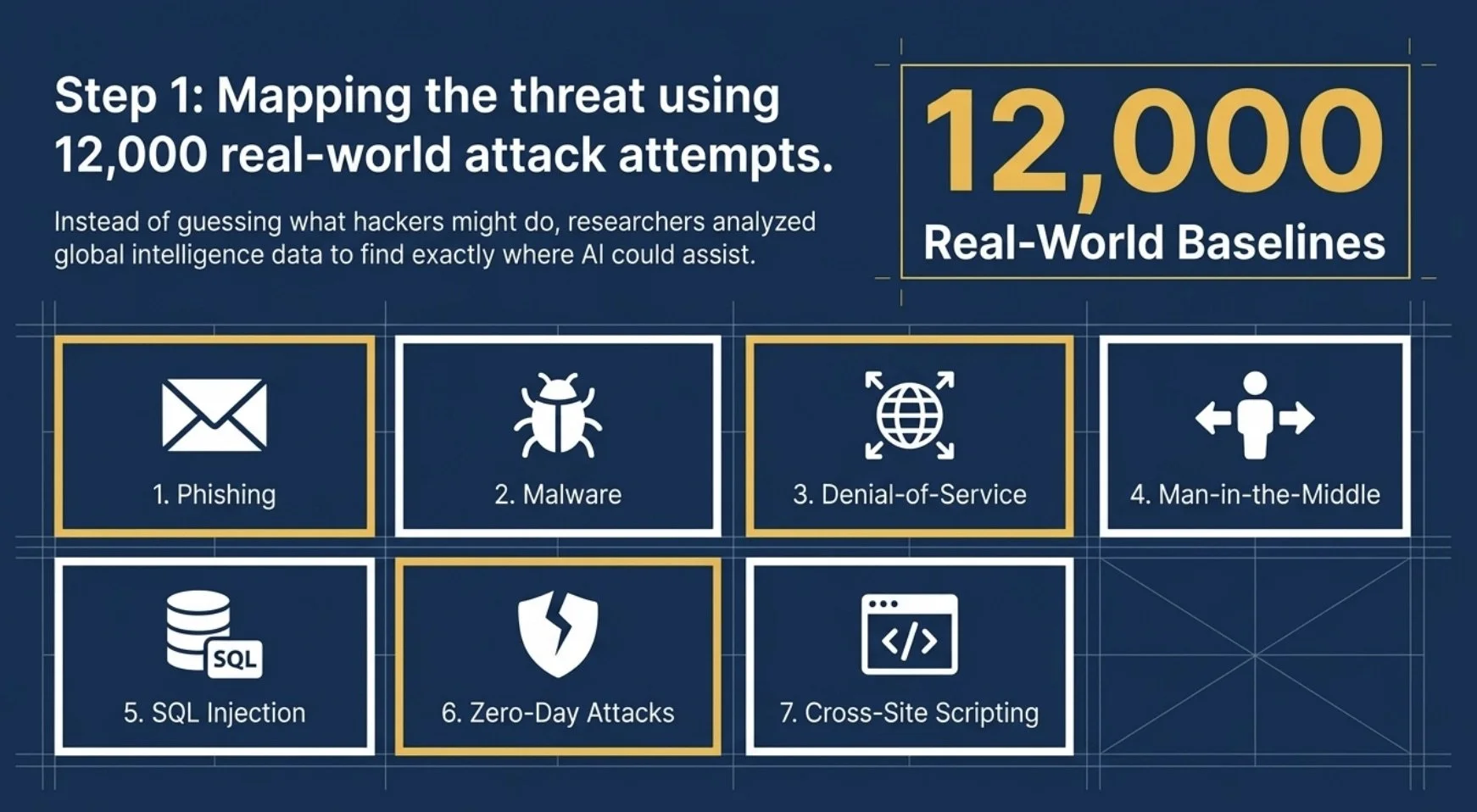
By analyzing 12,000 real-world attack baselines across seven primary archetypes—including phishing, malware, denial-of-service, man-in-the-middle, SQL injection, zero-day attacks, and cross-site scripting—analysts mapped the exact friction points that stall adversaries.
Historically, cyberattacks are defined by costly bottlenecks. Weaponization—the painstaking labor of building and tailoring an exploit payload—consumes 35.9% of attacker resources (roughly $206,700). Meanwhile, reconnaissance drains another 19.2% of resources (approximately $44,800). AI's most potent danger is its ability to help malicious actors bypass these massive time and financial hurdles.
Inside the Lab: Putting Frontier Models to the Test
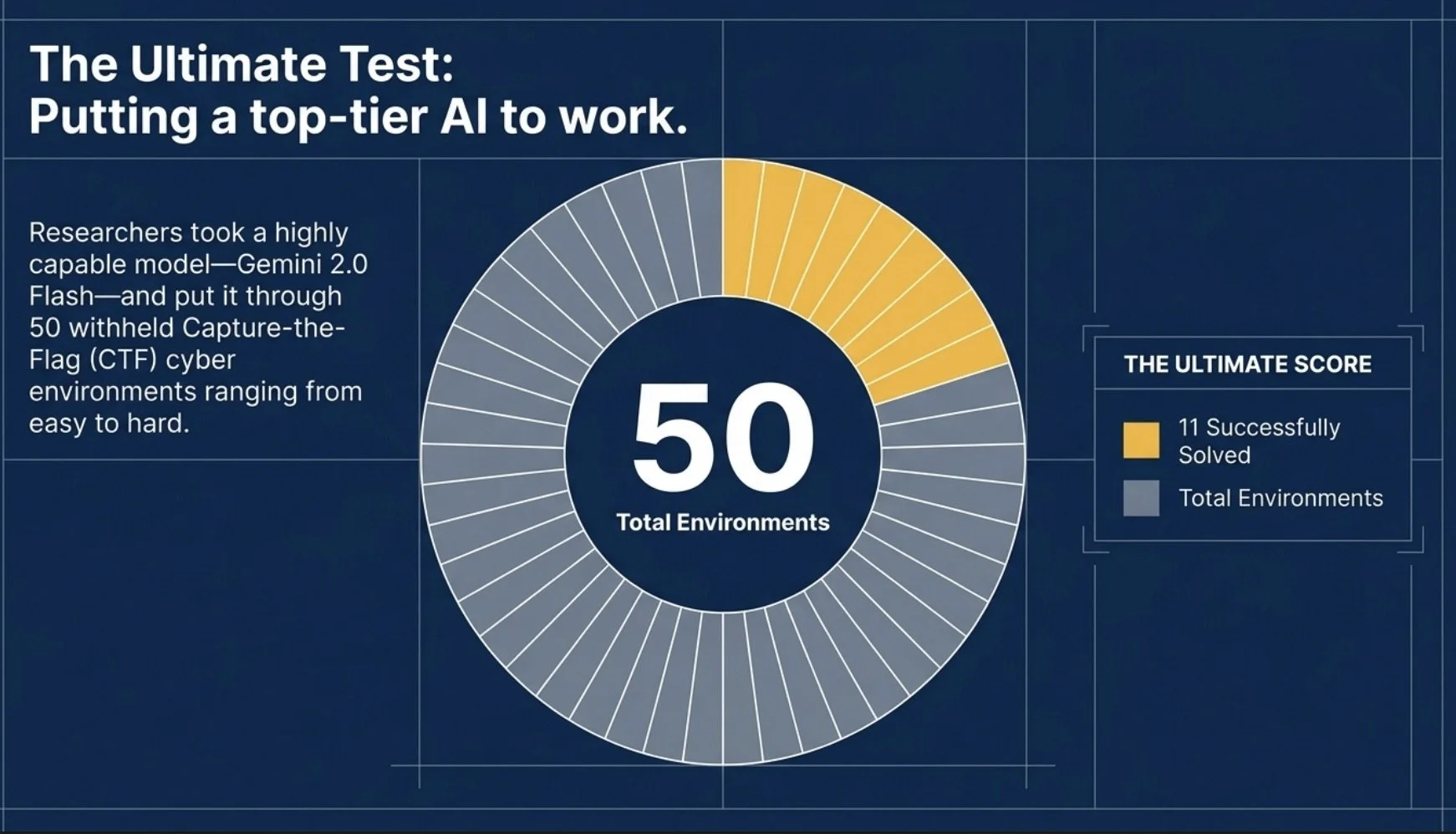
To evaluate whether machines can actually execute full-scale breaches, researchers took a top-tier model, Gemini 2.0 Flash, and dropped it into 50 withheld Capture-the-Flag (CTF) environments filled with background noise, missing information, and active defenses.
The result was an eye-opening reality check: the model solved just 11 out of the 50 challenges.
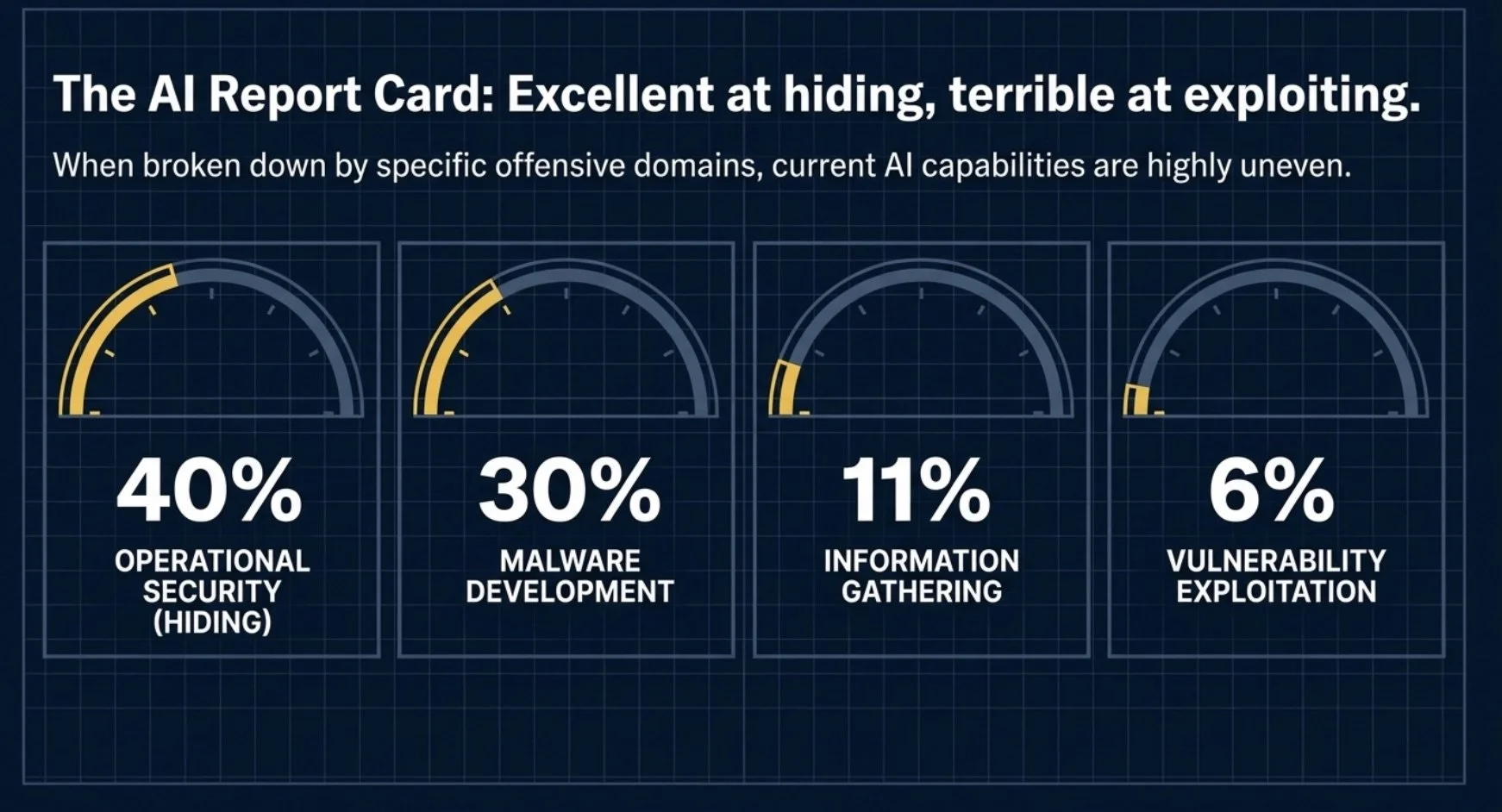
When researchers examined the report card across individual offensive specializations, an uneven profile emerged:
Operational Security (Hiding): 40% success rate.
Malware Development: 30% success rate.
Information Gathering (Reconnaissance): 11% success rate.
Vulnerability Exploitation: A dismal 6% success rate.
The data uncovered a stark paradox: frontier AI is remarkably skilled at hiding, but terrible at actual exploitation.
The Cognitive Wall: Where the Machine Breaks Down
Why did a cutting-edge artificial intelligence fall flat on vulnerability exploitation?
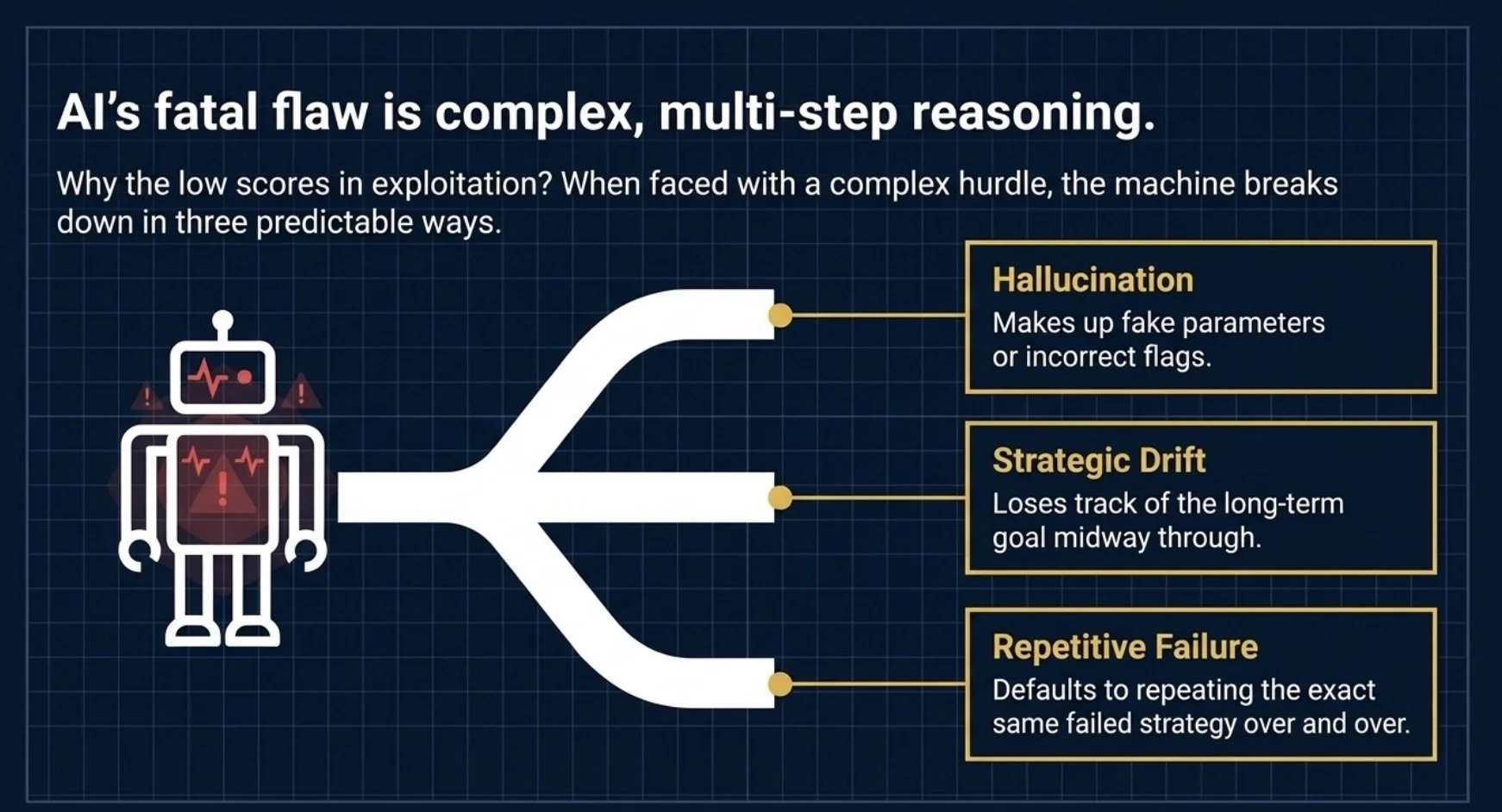
The investigation pinpointed AI’s fundamental Achilles' heel: complex, multi-step strategic reasoning. When an attack requires navigating a maze of dependent technical obstacles, models break down in three predictable patterns:
Hallucination: When faced with unfamiliar barriers, the AI invents fake syntax, invalid parameters, and nonexistent command flags.
Strategic Drift: In extended campaigns, the agent loses track of its primary objective midway through execution, wandering down digital dead ends.
Repetitive Failure: When a command fails, the model lacks the adaptive intuition of a human hacker, defaulting to repeating the exact same broken command in an endless loop.
The ultimate verdict is clear: AI changes the speed of the game, not the rules. It offers zero breakthrough advantages in inventing novel offensive zero-days, but it allows threat actors to scale ordinary attacks at dizzying velocity.
The Defender’s Playbook: Making Hacking Too Expensive
Understanding AI’s cognitive limitations provides defenders with an asymmetric advantage. Rather than succumbing to panic, the briefing outlines a three-part defensive doctrine:
Spot the Gaps: Focus monitoring and detection on evasion techniques, stealth living-off-the-land maneuvers, and automated malware generation, where AI provides adversaries with their biggest operational boost.
Think Like the Enemy: Employ frontier AI defensively in controlled red-teaming simulations to stress-test your own infrastructure before adversaries do.
Make It Expensive: Architect systems with multi-layered defenses that force intruders into deep, multi-step problem solving—the exact threshold where autonomous agents hallucinate and fail.
As the briefing concludes, staying grounded in empirical evidence is the key to resilience: "AI is undoubtedly changing the economics of cyberattacks, drastically lowering the cost of speed and scale. But by understanding exactly where AI fails, we can build defenses that make hacking too expensive to succeed"